

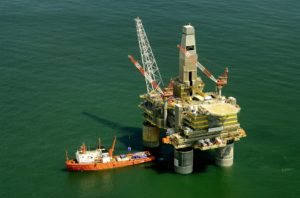

A number of mobile drilling rigs and semi-submersible floating drilling units experienced failure, resulting in huge losses for oil and gas companies. It is estimated that more than 3000 oil and gas platforms in the Gulf of Mexico were impacted by Hurricane Katrina. Read this article to learn more the impact of the hurricanes and the measures taken by the industry to increase safety for workers on offshore oil rigs.
Crude Oil Spill Caused By A Hurricane Continues Even After A Decade
An oil leak at an offshore platform that toppled during a hurricane is expected to continue leaking crude oil for more than a century. This raises serious safety concerns for workers employed on oil rigs and adversely impacts the environment, affecting marine life and communities dependent on them for their livelihood.
This disturbing fact should motivate oil rig owners and oil and gas companies that are operating offshore oil rigs to strengthen rig structures and oil rig platforms to withstand heavy winds and strong waves.
Damages caused due to hurricanes and safety concerns can deter companies from finding skilled workers for offshore job vacancies.
Eric Tucker And Michael Kunzelman said in a recent news article:
“A decade-old oil leak where an offshore platform toppled during a hurricane could continue spilling crude into the Gulf of Mexico for a century or more if left unchecked, according to government estimates obtained by The Associated Press that provide new details about the scope of the problem.
Taylor Energy Company… maintains that nothing can be done to completely eliminate the chronic oil slicks that often stretch for miles off the coast of Louisiana.”
New Design Standards For Offshore Rig Structures
Following the aftermath of Hurricane Katrina, the American Petroleum Institute release new design standards for oil rig structures. The government followed suit by introducing regulations that would lead to stronger oil rig structures.
Jennifer Larino said in a recent article:
“After Katrina and Rita, the American Petroleum Institute released hundreds of pages of new design standards, including raising the 100-year wave crest height to 91 feet. The group developed stronger guidelines for tying down derricks, compressors and other platform features affected by storm winds. Government regulations drew heavily upon these standards.”
Read this article to learn about how hurricanes can wreak havoc on oil rig operations. Necessary safety measures by offshore oil rig companies are a must to protect the structures from damage.