
Challenges Faced In Offshore Oil Drilling Operations In The Arctic
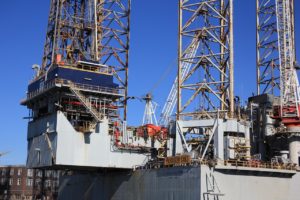 The Arctic is believed to have large, untapped energy resources in the form of oil and natural gas deposits. This is the reason why many leading oil and gas companies across the globe like Shell and ConocoPhillips have made investments to explore and produce oil. Although the initial investment costs are very high compared to other regions, the promise of finding large quantities of oil and gas deposits outweighs any financial concerns. The steady demand for oil and gas resources to fulfill the energy requirements of various countries encourages further exploration and oil drilling efforts.
Matthew DiLallo says in a recent article,
“According to a 2008 report from the U.S. Geological Survey, there could be up to 90 billion barrels of oil and 1,669 trillion cubic feet of natural gas. Meanwhile, according to The Bureau of Ocean Energy Management, Alaska’s portion of those offshore riches are believed to be about 23 billion barrels of oil.”
However, tapping these rich resources is easier said than done. Oil and gas companies need to be prepared to face the unique challenges posed by the Arctic region. This write-up highlights some of these challenges.
Hostile Weather Conditions
Oil and gas companies face hostile weather conditions in the Arctic region, due to the extreme temperatures in this region. The sea surface is covered with thick ice most of the year, which makes it difficult for workers to operate equipment and manage oil drilling work.
In a recent news article Jennifer A. Dlouhy says,
“The Interior Department’s work is a recognition that the Arctic presents unique challenges, including thick sea ice much of the year, dense fog in summer and remote terrain more than 1,000 miles from the nearest major port.”
Lack Of Timely Support In Case Of An Emergency
Yet another challenge is the absence of support in the form of equipment and skilled people in controlling fires in case of emergency situations. The Arctic is a remote area, where very few people reside due to the extreme temperatures. This makes it difficult for shipping vessels and rig crew members to find help when they get into trouble.
Dlouhy elaborates further: “Energy companies should have immediate access to emergency equipment for capping and containing blown-out wells and allowing captured oil to flow to surface processing vessels.”
Concerns of Oil Spill Management
The ice-covered waters of the Arctic make it virtually impossible to manage oil spills. Travelling within the Arctic itself is a major challenge, as people have to navigate in between massive chunks of ice to reach their destination.
To put the hazards of oil spills in the Arctic into perspective, Joel K. Bourne, Jr explains in a recent article, “The Arctic Ocean annually freezes into a jumbled, floating mass of ice larger than Canada and Alaska combined.”
Retrieving spilled oil is a far greater challenge in ice-covered waters. Although researchers and scientists are trying to develop a solution to deal with oil spills, so far, they have not been able to come up with a suitable solution.
Bourne says further,
“In fact, in 2003, the last time a National Academy of Sciences panel looked at the issue, it concluded: “No current cleanup methods remove more than a small fraction of oil spilled in marine waters, especially in the presence of broken ice.”
Although the Arctic is believed to posses large deposits in the form of oil and natural gas, this region poses many risks and challenges. This article brings to light some of the challenges faced by leading oil and gas companies involved in oil and gas exploration activities in the Arctic. This may also influence the availablity of the number of Shell oil jobs for job aspirants.

Guide to Getting a Great Job That Pays on a Wyoming Oil Rig
Recent Study Projects An Increase In Pipeline Jobs

How To Find Your Footing After A Layoff
About Author
