


Geoscientist
A geoscientist is able to discover the locations of oil and gas as well as mineral and other geothermal deposits. They spend a lot of their time in laboratories analyzing samples and developing computer models. A geoscientist will obtain data to help them measure and map the thermal, magnetic, gravitational and electrical forces that influence the earth. They need to be detail oriented as well as have analytical, scientific abilities and more.
Petroleum Engineers
In this field, entry level petroleum engineers are in demand the most. This is because companies want to train employees on their processes. It’s more of a challenge to retrain an engineer from another company or industry. A petroleum engineer will be responsible analyzing information to determine the best places to put wells, monitor production rates, develop plans for oil and gas drilling, write technical reports and more. Their ability for critical thinking, as well as creative problem solving, and communication skills are essential.
Reservoir Engineer
The ability to create reservoir models using specific software products is important. These engineers should be able to evaluate the possible level of production from a reservoir by creating models that show a well’s fluid flow phase behavior. They should also be able to show the physical properties of a reservoir. Models that are created can be validated using accurate reservoir data. A reservoir engineer will also be asked to participate in field work. The goal is to increase production capacity to its highest possible level. They should be detail-oriented and able to analyze a wide variety of data and more.
Production Engineer
A production engineer is responsible for the performance of specific oil and gas wells. They will use various data sources to determine the best methods for optimizing the flow of gas, oil and also water. They will design equipment systems able to separate these particular substances. Most of their work will be done indoors. A production engineer will usually not go out to the field site unless they’re performing troubleshooting work. They will need to have analytical abilities, as well as management skills.
Drilling Engineer
These engineers are responsible for developing, planning and supervising the drilling of oil and gas wells. They are involved with the project from the first phases of testing and design to the completion and abandonment of the gas and oil wells. They are responsible for making certain the drilling operations are done utilizing the safest and most economical methods. They may work on land, offshore drilling platform or mobile unit. They will also work closely with geologists and geoscientists to analyze the drilling process.
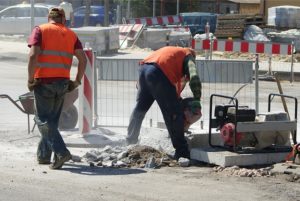
Skilled Trades
The oil and gas industry has an increasing need for all types of skilled trades. This includes machinists, steam-ticketed operators, pipefitters, hydraulic machinery operators, welders and more. Many of these positions require graduation from a trade school combined with training at a work site.